Real Estate Video Editing: 5 Trends Every Agent Should Know in 2026

Real Estate Video Editing has become much more than a post-production task as buyer behavior continues to evolve. It is now a strategic marketing tool that influences how quickly a property captures attention, generates inquiries, and ultimately sells. While high-quality footage remains essential, editing is what transforms raw clips into a compelling story that encourages viewers to imagine themselves living in the home.
In 2026, advances in artificial intelligence, changing social media habits, and increasing consumer expectations are reshaping how listing videos are created. This article explores why professional editing matters more than ever and the key trends defining the future of real estate video marketing.
Why Real Estate Video Editing Matters More Than Ever
Buyers now rely on video before booking a property showing. Industry data shows that listings with video generate more inquiries than those without. Most homeowners also prefer working with agents who use video in their marketing strategy.
But filming and editing are not the same job. Raw footage only becomes persuasive once it’s been shaped, the strongest moments selected, the pacing tightened, the color and light corrected, and a clear next step built into the final cut. A beautifully filmed property can still fail to convert if the edit doesn’t tell a story. That’s exactly why editing, not filming, is where most of 2026’s innovation is concentrated.
The Real Estate Video Editing Trends Defining 2026
Technology continues to reshape the industry, but the biggest changes aren’t just about automation, they’re about creating faster, smarter, and more personalized content. Here are the real estate video-editing trends defining 2026.
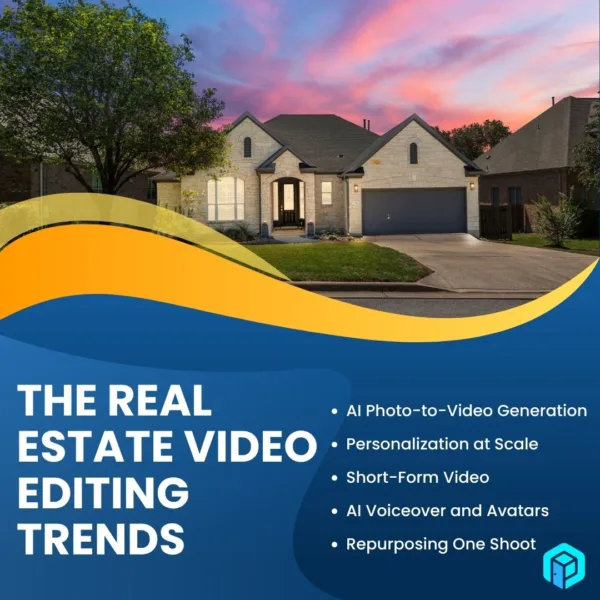
AI Photo-to-Video Generation
The single biggest shift in real estate video editing right now is the ability to generate a full walkthrough video directly from listing photos, with no filming required. Dedicated real estate AI platforms can turn a set of listing photos into a polished, MLS-ready video in minutes, complete with captions, music, and camera-style motion, using tools like AutoReel and PhotoAIVideo. For smaller listings or budget-conscious marketing campaigns, AI-generated videos provide an affordable alternative to traditional filming while maintaining visual appeal.
Although they cannot fully replicate genuine walkthrough footage, these tools dramatically reduce production costs and turnaround times.
Personalization at Scale
Modern buyers expect property marketing to feel relevant, not generic. Instead of relying on a single listing video for every audience, real estate professionals are increasingly creating multiple versions tailored to different buyer segments. This shift toward personalization at scale reflects growing demand for content that feels authentic and directly addresses individual interests.
For example, one version of a video may highlight family-friendly features such as spacious backyards and nearby schools, while another focuses on investment potential, luxury finishes, or remote-work spaces. Even small changes, such as customizing the opening message or emphasizing neighborhood amenities that matter to a specific audience, can make a listing feel more engaging.
AI-powered editing tools now make this process far more efficient. Rather than rebuilding each video from scratch, editors can quickly generate multiple variations from the same source footage by adjusting narration, text overlays, music, or featured scenes. This allows agents to deliver more targeted marketing while maintaining a fast and cost-effective production workflow.
Short-Form Video Prioritizes Authenticity Over Perfection
Short-form vertical videos under 60 seconds remain the most popular format on Instagram Reels, TikTok, and YouTube Shorts. According to Luxury Presence (2026), these videos continue to generate the highest engagement across social platforms.
However, Home Value Leads (2026) reports that buyers are increasingly favoring authentic, casual videos over highly polished productions. A case study shared by Cufinder (2026) even found that an agent tripled their inquiries after switching to simple smartphone-shot walkthrough reels.
For editors, the takeaway is simple: don’t over-polish. Clean cuts, clear captions, and natural storytelling often outperform heavy effects, making tools like CapCut and Descript ideal for creating engaging short-form real estate videos.
AI Voiceover and Avatars – Used With Disclosure
More real estate agents now use AI-generated voiceovers and digital avatars to create listing videos, helping agents create multilingual content and produce listing videos more efficiently. According to AutoReel (2026), buyers are also becoming more sensitive to AI-generated content, making transparency more important than ever.
Rather than replacing human interaction entirely, many agents use AI for routine content such as market updates or multilingual narration while reserving on-camera appearances for videos that build trust and personal connections. Agents should clearly disclose AI voiceovers, avatars, and virtual staging to maintain credibility and buyer confidence.
Repurposing One Shoot Into a Content Library
Instead of producing just one finished listing video, agents are now maximizing the value of every property shoot. Editors can turn one property shoot into five to ten pieces of content, including teaser videos, feature highlights, vertical Reels, and social media clips.
Agents use this approach to maintain a consistent online presence without scheduling additional shoots. AI-powered editing tools also make it easier to generate multiple versions from the same footage, saving time while extending the reach of every listing.
What AI Still Can’t Replace in Real Estate Video Editing
AI now handles many of the repetitive technical tasks in video editing, including color correction, stabilization, basic pacing, and exporting videos in multiple formats. As automation takes over these routine processes, human editors focus on the work that truly influences whether a property video converts viewers into buyers.
Human editors shape the story. AI can identify patterns in viewer behavior, but experienced editors create the emotional flow that keeps audiences engaged. They decide when to slow the pace, when to build momentum, and which moments deserve extra attention. A lingering shot of sunlight filling a kitchen or a smooth transition into a backyard isn’t chosen by data alone; it reflects an editor’s understanding of what resonates with potential buyers.
Editors choose the moments that matter. AI can recommend highlight clips based on engagement metrics, but skilled editors select the exact “money shot” that makes viewers stop scrolling. They combine creative judgment with market knowledge to showcase each home’s most compelling features. As a result, two editors using the same AI tools can still produce very different and equally distinctive videos.
Professionals make the strategic decisions. AI can generate realistic voiceovers, digital avatars, and virtual staging, but people decide when these tools improve the viewing experience and when authenticity is the better choice. They also determine how and when AI-generated elements should be disclosed, balancing marketing effectiveness with transparency and trust.
Agents create the trust that technology can’t replace. Industry reports throughout 2026 consistently show that buyers often connect with an agent before they commit to a property. By appearing on camera and communicating naturally, agents build familiarity and credibility that strengthen buyer confidence. AI can enhance production efficiency, but genuine human presence remains a powerful factor in real estate marketing.
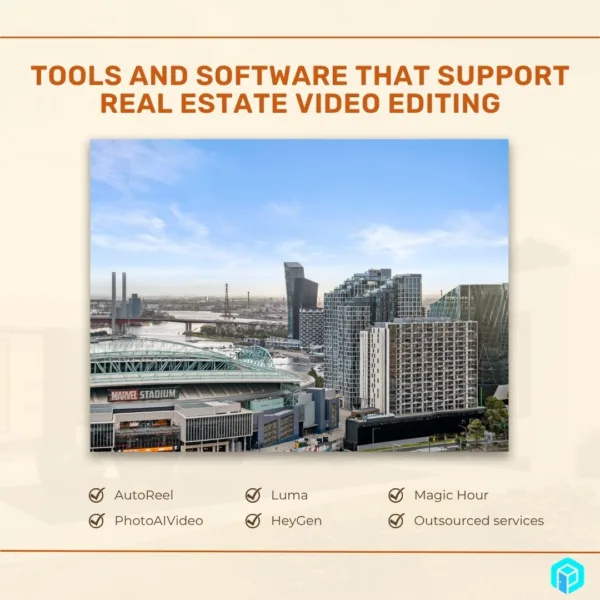
Tools and Software That Support Real Estate Video Editing
AI-powered video generation platforms. Tools like AutoReel, PhotoAIVideo, and Luma turn listing photos into finished videos in minutes, complete with templates, music, captions, and brand customization, designed for agents who need speed and volume across many listings.
All-in-one avatar and multilingual platforms. Tools like HeyGen combine branded presenter videos, photo-based property tours, and dozens to over a hundred languages in a single workflow, useful for agents who want one platform instead of stitching several tools together.
Broader AI creative platforms. Tools like Magic Hour combine video generation, animation, and image enhancement in a single workspace, which suits teams that need more than just listing tours, social ads, neighborhood highlights, and agent branding clips on the same platform.
Professional editing software. For cinematic videos that need finer control, layered color grading, custom transitions, and multi-track audio, dedicated editing software remains essential, particularly for luxury listings where visual polish is a direct competitive advantage.
Outsourced editing services. For agents who’d rather not edit at all, a dedicated editor or service can handle everything from drone footage cleanup to multi-format exports. When evaluating a service, prioritize real estate experience, fast turnaround, a portfolio that matches your brand, and demonstrated ability to handle drone footage.
Most agents end up using a mix of all of these AI tools for speed and volume, a platform like HeyGen for multilingual or avatar-based content, and professional editing or an outsourced editor reserved for flagship listings.
Final Thoughts
AI is changing how agents create property videos, but technology alone won’t sell a home. Buyers still respond to clear storytelling, authentic communication, and high-quality editing. The most successful agents in 2026 combine AI with professional editing to produce videos that capture attention, build trust, and convert more viewers into clients.
If you edit videos in-house or partner with a professional real estate video editing service, focusing on quality and authenticity will help your listings stand out in an increasingly competitive market.
Can AI Replace Professional Real Estate Editors?
Day-to-Dusk Real Estate Editing for Stunning Property Listings
How to Build Client Trust with Real Estate Photo Editing