
In real estate photography, why AI can’t replace humans in editing?
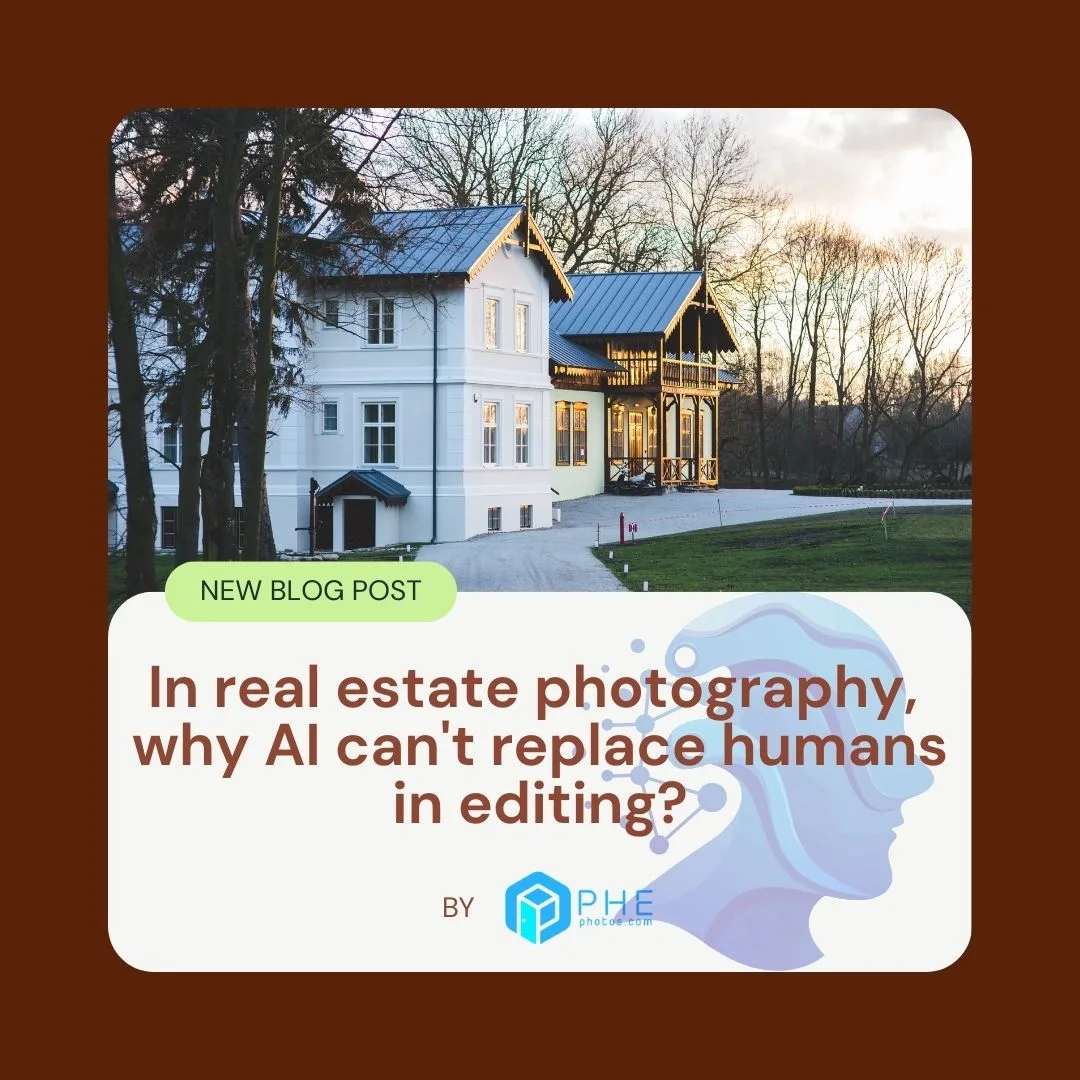
Real estate photography has evolved dramatically in recent years, especially with the rise of AI-powered editing tools. Although AI can automate repetitive tasks, human expertise remains crucial in creating compelling and emotionally engaging images. This article explores why AI cannot fully replace human editors in real estate photography.
I. Human understanding of emotion and storytelling
Real estate photography is not just about capturing the property; it’s about telling a story that allows viewers to imagine themselves living there. Because of this, editing requires more than adjusting brightness or contrast.
AI can analyze patterns and apply presets efficiently. However, it lacks the emotional intelligence to understand how colors, lighting, and composition affect a viewer’s perception. Humans, in contrast, can enhance a cozy living room with warm tones or make a modern kitchen feel crisp and elegant. As a result, human-edited images often feel more inviting and unique, while AI outputs tend to be generic.
1. Crafting moods and atmosphere
Human editors can detect subtle cues that AI often misses. For example, balancing shadows and highlights or selectively emphasizing textures creates depth and realism. These nuanced decisions contribute to an authentic mood, which AI cannot fully replicate.
2. Tailoring to property uniqueness
Every property is different, and human editors can highlight its distinctive features. They can adjust angles, color tones, and lighting in ways that AI cannot intuitively understand, ensuring each image tells a unique story.
3. Subtle emotional storytelling
Beyond technical edits, human editors know how to evoke feelings through visuals, like warmth, spaciousness, or luxury,.. depending on the property and target audience. This emotional storytelling is something AI cannot genuinely achieve.
II. Collaboration with agents and clients
AI editing tools can follow preset rules, but they cannot replace human collaboration. Real estate agents often have specific branding and stylistic preferences that require interpretation.
Human editors can communicate with agents, receive feedback, and refine images until the result aligns perfectly with their vision. In contrast, AI applies uniform adjustments, which might not meet a client’s nuanced expectations.
1. Personal Branding & Nuanced Feedback
Human editors can tailor images to match each agent’s unique personal branding—something AI still struggles to fully internalize. They also understand and apply subtle feedback, such as brightening an image while preserving natural shadows. In contrast, AI tools often over-simplify edits or miss the intended nuance.
2. Creative Problem-Solving in Complex Visual Scenarios
Photos frequently contain unexpected issues like reflections, lens distortion, or inconsistent colors. Human editors can analyze these situations and craft creative, context-aware solutions. AI, however, tends to struggle when visual problems become complex or fall outside typical patterns.
Watch more: Do you know about the benefits of AI in HDR editing?
III. Creativity, ethics, and responsibility
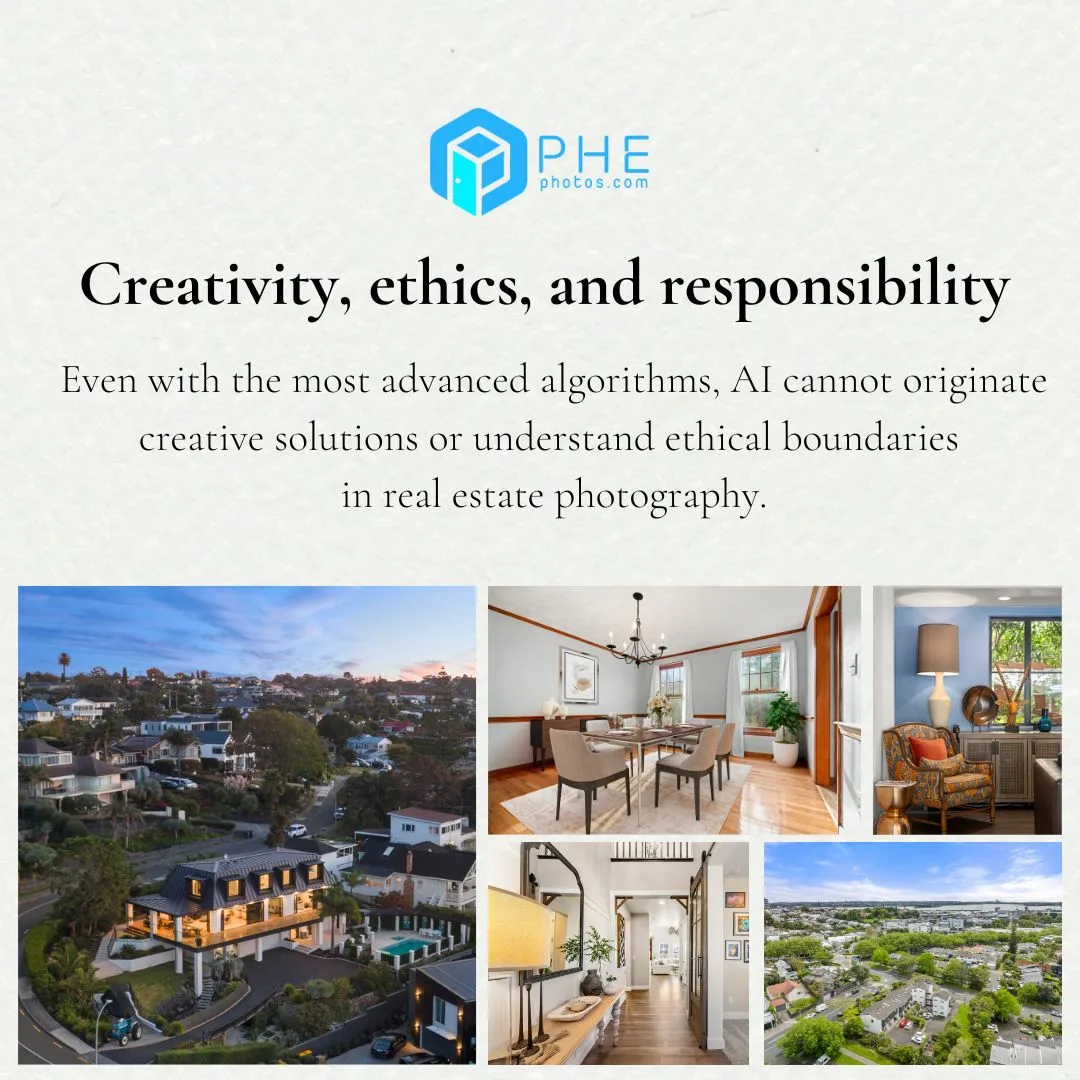
Even with the most advanced algorithms, AI cannot originate creative solutions or understand ethical boundaries in real estate photography.
1. Creativity in editing
Human editors can experiment with color grading, composition, and style to produce distinctive images that elevate a property’s appeal. Beyond traditional photography, many real estate professionals now use 3D services, including virtual staging, virtual renovation, and other AI-assisted enhancements.
a. AI-powered virtual services
AI performs these tasks efficiently and generates polished virtual products quickly, such as furniture placement or room renovation concepts.
b. Human oversight and refinement
However, humans ensure that virtual elements feel natural, match the property’s style, and align with the agent’s branding. Without human guidance, even AI-generated visuals can look generic or unrealistic.
c. Combining AI efficiency with human creativity
The best results come from blending AI tools and human expertise. AI accelerates workflow, while humans add context, subtle storytelling, and artistry to produce truly compelling images.
2. Ethics and responsibility
a. Maintaining truthful representation
Real estate photography must remain honest. Humans ensure enhancements improve aesthetics without misleading viewers, while AI may unintentionally exaggerate or misrepresent features.
b. Accountability in professional work
Human editors understand the responsibility of representing properties accurately, recognizing that clients’ financial and emotional investments are significant. AI cannot assume such accountability.
c. Upholding quality standards
From technical perfection to aesthetic consistency, human oversight ensures each image meets high professional standards. This quality control is critical and irreplaceable.
Conclusion
In conclusion, AI tools are valuable for speeding up certain tasks in real estate photography, particularly for virtual staging and repetitive edits. However, human editors remain essential for emotional storytelling, collaboration with clients, creative decision-making, ethical responsibility, and fine-tuning AI-generated content. Combining human expertise with AI technology provides the most effective, compelling, and trustworthy results for showcasing properties.
Read more:
Window Pull Technique in Real Estate Photo Editing: A Complete Guide
Furniture Replacement – Transform Real Estate Photos
Modern Portrait Photo Editing: A Clear Guide to Today’s Techniques